Esta página también está disponible en español. Ver en español

Lower electricity cost at every plant in your auto parts network

We advise auto parts manufacturers with several plants in Mexico on MEM migration, Qualified Supply contracting and plant energy audits. We represent the buyer only and take no commissions from suppliers or equipment vendors.

One recent CFE bill per plant Initial response within one business day NDA available
1,150+MW migrated to renewable energy
25.4%weighted average savings from renewable energy procurement, 2020 to 2025
2015year founded
300+pages in a completed Level 2 audit report

The electricity cost of an automotive plant is decided on the production floor

The monthly bill shows the total. It does not show which line start-up set the peak demand or what each system costs per part produced. The MEP review ties every charge to the operating event that causes it.

01

Presses and stamping

Simultaneous start-ups of press lines that set the peak demand for the billing period.

kW · kVA · power factor
02

Welding and assembly

Robotic cells and resistance welding with intermittent load profiles.

load · operating time
03

Paint and curing

Booths, curing ovens and air handling with high thermal and electrical consumption.

temperature · airflow · fuel
04

Plastic injection

Injection machines, mold heating and process cooling.

load · temperature
05

Compressed air

Leaks, pressure above what the process needs and compressors running unloaded.

pressure · flow
06

Heat treatment

Furnaces and thermal processes where scheduling defines the cost in peak hours.

fuel · heat · schedule
Energy intensity

Energy consumption divided by the relevant production variable, for example kWh per stamped part or per painted unit. This metric is the common baseline that aligns plant, finance and procurement.

Your plant still pays for power when the lines stop

A plant running two eight-hour shifts, five days a week, produces for 80 of the 168 hours in a week. The meter runs for all 168. MEP measures what your plant consumes in the other 88 hours and turns each load into a measure that finance can rank.

01

Production changed, the baseline did not

New lines, shifts or programs changed the load. The energy baseline and cost targets still reflect the old plant.

02

Base load stays on

Compressed air, pumping, ventilation, ovens, robots and utilities keep running through breaks, weekends and planned stops, even when volume does not justify the consumption.

03

Measures cannot be compared

Maintenance finds opportunities. Finance needs them on common criteria: investment, annual saving, operating risk and priority.

What we measure

Hourly consumption and demand, shift schedules, production volume and product mix, planned stops, and the load that remains outside production.

Request a preliminary plant assessment See what an audit identified at a stamping plant in El Bajío

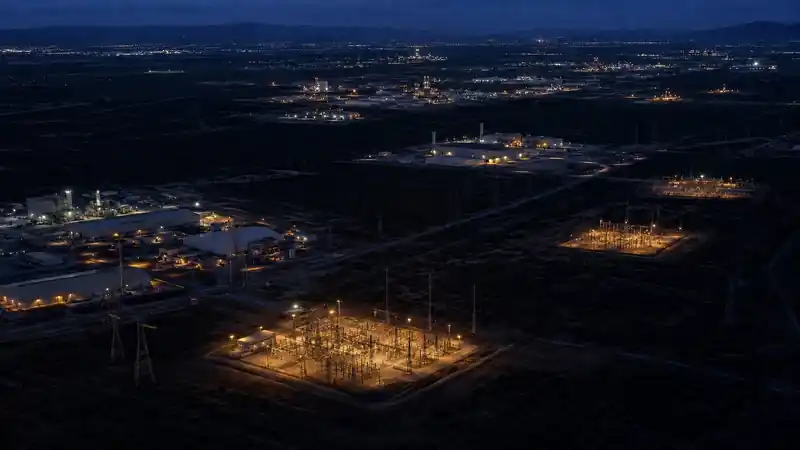
Industrial park lit at night with several plants and an electrical substation

A network of plants negotiates better than a single plant

Suppliers compete harder for portfolios with scale and stable load. Auto parts plants running two or three shifts usually meet both conditions. MEP evaluates all of your Load Centers under one contractual and governance framework.

Operating scale

Electricity spend and demand large enough to attract credible competition among suppliers.

Load stability

Continuous or near-continuous operation, with a high load factor across the billing cycle.

One file

One baseline, one tender and one contract for plants in the Bajío, the north and the center of the country.

The voluntary migration period has a closing date

Portfolios holding legacy self-supply permits have a defined path to migrate to the Wholesale Electricity Market. With a coordinated plan, first supply arrives 7 to 10 months after the baseline starts. Starting early leaves room to compare offers before the period closes.

Official migration period
19 June 2026 to 6 October 2028
750calendar days left until the period closes

Per the SENER guidelines of June 2026.

Basic Supply

Standardized service from the basic supplier.

Lower internal administrative load.

No competitive tender among suppliers and no negotiated PPA contracts.

Qualified Supply

Competitive offers from suppliers and PPA contracts.

The supplier represents the load in the MEM.

The buyer controls exclusions, credit, regulatory change and exit terms.

Recommended model for plant networks

Direct participation in the MEM

Registration as a Market Participant with CENACE.

Higher systems and governance requirements.

Guarantee, forecasting, settlement and compliance obligations.

Two services that share one baseline

The two services can be contracted separately. The baseline we build for the tender also serves to prioritize measures on the plant floor.

MEM migration and Qualified Supply

For portfolios of two or more plants with continuous operation.

  • Portfolio baseline from twelve months of billing and interval data
  • Comparable tender among suppliers and PPA negotiation
  • Coordination of Qualified User and Load Center requirements through first supply
  • Audit of CENACE settlements and supplier invoices against the approved baseline
Request a MEM readiness review

Industrial energy audit

For plants that need to prioritize investment before committing capital.

  • On-site measurements of presses, compressed air, cooling and thermal processes
  • Opportunity register prioritized by impact, confidence and readiness to implement
  • Investment cases with capital, annual saving, dependencies and visible assumptions
  • Action plan with owners, sequence and measurement requirements
Request a preliminary plant assessment
Energy audit scope levels
ScopeManagement useOutput for the decision
Bill and demand reviewResolve a specific tariff, demand or billing problem.Preliminary findings and the data needed for the next analysis.
Plant energy assessmentIdentify and prioritize opportunities before committing capital.Baseline, systems review and prioritized opportunity register.
Detailed energy auditSupport an engineering and investment decision.Measurements, quantified opportunities, conceptual scope and economic evaluation.

Results at manufacturers with several sites

Each figure states whether the result was achieved or only identified. Client names are shared under a confidentiality agreement.

18%Achieved

Battery and automotive components

Portfolio
45 MW across 9 plants · about 305 GWh
MEP scope
Supply tender
Baseline
Bills and interval data
28.5%IRR identified

Automotive stamping, El Bajío

MEP scope
Plant energy audit
Economic value
About USD 487 thousand
Emissions
About 1,140 tCO2e per year, close to 23% of Scope 2 emissions (GHG Protocol, market based)
15%Identified

Multi-site industrial

Portfolio
6 MW across 3 sites · about 32 GWh
MEP scope
Savings estimate
Baseline
Billing and site data

Results vary by facility. Identified figures are estimates subject to verification and do not constitute verified or guaranteed savings. MEP describes a saving as verified only when measurement and verification under IPMVP exists.

A scenario with the numbers of your plant network

Apply the range of results from MEP reference projects to your annual electricity spend. The confidential review replaces this scenario with your own baseline.

4
Load Centers that could be evaluated in one portfolio.
60 M
Sum across all plants, including energy, demand and transmission charges.
Calculation reference

An annual spend of MXN 46.4 M multiplied by a gross market saving of 11.6% equals MXN 5.38 M. A net target of 10.0% equals MXN 4.64 M. MEP always separates the gross value from the net value to the client.

Reference range, 13% to 18%
MXN 7.8 M to 10.8 M
per year, in a scenario inside the range of reference results
Average per plantMXN 2.0 M to 2.7 M
Value of each month of delayMXN 0.7 M to 0.9 M
Profile that supports reviewing a portfolio tender for all of your plants.
Validate this scenario with my bills

Illustrative scenario. Not an estimate or a guarantee of savings. Results vary by facility and depend on load profile, tariff, market offers and contract terms.

From the CFE bill to first supply in 7 to 10 months

Each stage ends with a deliverable that management approves before moving on. You decide at each point whether to continue.

1

Portfolio assessment

Baseline, load profile, eligibility and governance.

Month 1
2

Commercial recommendation

Comparable offers, total cost model and preferred supplier.

Months 2 to 4
3

Contract and migration

Signed PPA, registrations and confirmed readiness.

Months 4 to 7
4

Controlled operation

First supply, settlement audit and savings reporting against the baseline.

From months 7 to 10

MEP is paid by the client only

0commercial relationships with equipment vendors
0commissions from suppliers or generators
100%of fees paid by the client
Typical integrator

May receive referral payments or commissions from the winning supplier or from an equipment brand.

Mexico Energy Partners

Represents the client exclusively and receives no commissions or referral payments from any participant in the transaction. Executive and technical support in English and Spanish, with one point of contact for energy procurement, regulation and settlements.

Every risk has a control defined before work starts

Project risks and MEP controls
RiskControl
Sensitive plant dataAn NDA can be signed before bills, interval data or production information are shared.
Production disruptionThe site work plan defines access, safety, measurements and operating schedules before any field work. The preliminary review needs no site visit.
Vendor biasMEP receives no commissions on equipment or energy sales and does not act as an installer.
Unsupported savingsEvery investment case keeps assumptions, dependencies, missing data and measurement requirements visible.
Unfavorable contractPrice exclusions, pass-through charges, credit, penalties, regulatory change and exit terms are defined before signature.
ISO 50002-1:2025General audit framework: planning, data, analysis and reporting.
ISO 50002-3:2025Industrial processes: energy balances and performance indicators.
ASHRAE 211-2018Levels 1, 2 and 3 for buildings and administrative areas of the plant.

What plant, finance and procurement directors ask

What information do you need for the preliminary review?

One recent CFE bill per plant or twelve months of monthly consumption, the location of each plant and the type of operation. No site visit and no contact with suppliers at this stage.

Do we need to share production data?

Yes, but you can start with indices or aggregated figures. MEP can sign an NDA before you share volumes, schedules or diagrams.

How long does the assessment take?

The initial response arrives within one business day. The preliminary assessment covers eligibility, commercial exposure, missing information and the recommended procurement path for your portfolio.

Our plants have different tariffs and permits

That is the norm in automotive networks. The baseline normalizes each Load Center and defines which plants belong in the tender, which stay on their current scheme and in what order they migrate.

How is MEP paid?

Through fees paid by the client. MEP receives no commissions from suppliers, generators or equipment manufacturers, so the recommendation does not depend on which offer wins.

Does MEP guarantee the savings?

No. Results depend on your data, operation, engineering, investment and execution. MEP documents every assumption and risk so management can decide before committing capital, and calls a saving verified only after measurement and verification under IPMVP.

Can you work with our corporate office outside Mexico?

Yes. The team works in English and Spanish and prepares deliverables for approval by local management and by corporate.

Start with one recent CFE bill

A preliminary review confirms the objective, the scope and the next data request before proposing an audit or a portfolio tender.

You send

One recent CFE bill per plant

Location and type of operation

The cost or decision you want to quantify

You receive

Initial feasibility assessment

Recommended scope

Specific data request

Request a confidential review

We will send the NDA and the instructions for sharing your bills.

Please enter your name.
Please enter a valid email.
Please enter the company name.
Please enter a valid phone number.
Plants in Mexico
Please select the number of plants.
You need to accept the privacy notice.

No site visit · No contact with suppliers · Response within one business day

Request received

An MEP partner will write to you within one business day.

  1. You will receive the NDA for signature.
  2. Reply to that email with one recent CFE bill per plant.
  3. MEP delivers the initial assessment, the recommended scope and the specific data request.
Request a confidential review